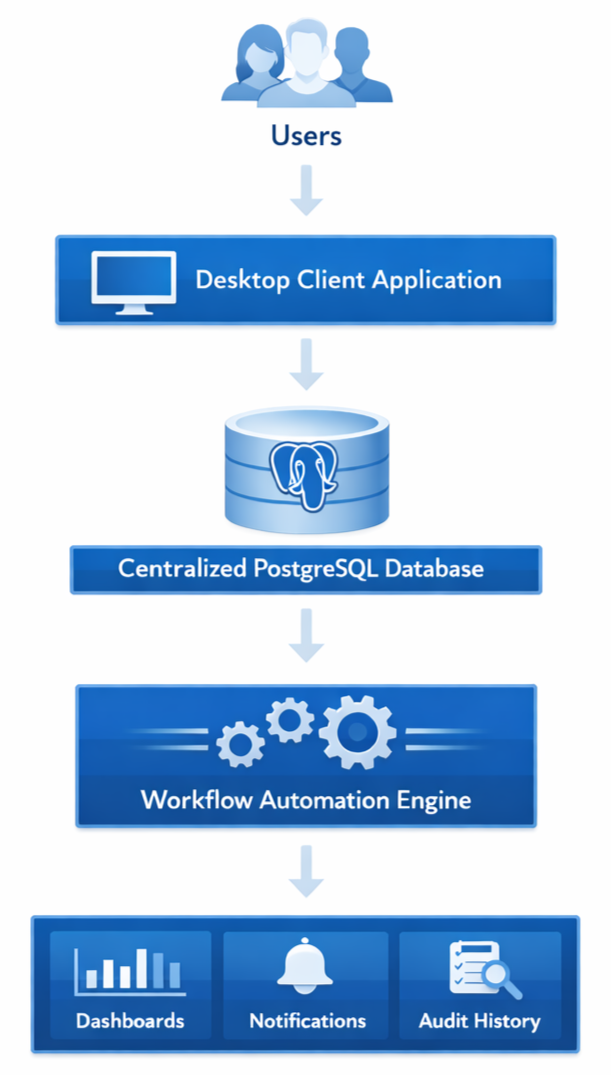
Project Tracker by AiME is a desktop-based application built around a centralized relational database.
The system is designed for multi-user engineering environments where concurrent editing, workflow automation, and audit reliability are required.
The platform prioritizes deterministic behavior, data integrity, and operational transparency.
Application Model
Project Tracker operates as a desktop client connected to a shared database server.
Users access the system through a lightweight desktop application while all project data is stored centrally.
This architecture provides:
• consistent project data across all users
• real-time multi-user editing
• centralized data management
• secure access through existing IT infrastructure
The system is designed to run within a firm's existing network environment.
Database Architecture
Project Tracker uses a PostgreSQL relational database to store all project, workflow, schedule, and action item data.
The database model provides:
• transactional integrity
• reliable concurrency handling
• structured relational data storage
• scalable multi-user access
PostgreSQL is a widely used enterprise-grade database platform trusted for high-reliability systems.
Multi-User Concurrency Model
Project Tracker supports simultaneous multi-user editing.
The system uses optimistic locking to prevent silent overwrites of project data.
If two users attempt to modify the same data, the system detects the change and prompts the user before saving.
This ensures:
• no data loss
• clear ownership of edits
• safe concurrent collaboration
Each project record stores last updated user and timestamp information.
Workflow Automation Engine
Workflow behavior is handled by a structured automation engine that monitors project conditions and generates or updates required tasks.
Automation can create and maintain:
• review cycle action items
• comment response tasks
• close-round milestones
• signature routing tasks
• billing reminders
• study-driven placeholder tasks
Automation updates existing items instead of duplicating them, ensuring workflow consistency.
Data Integrity & Audit History
Project Tracker maintains an internal history log for significant project changes.
Each entry records:
• the change type
• the user responsible
• timestamp
• snapshot of relevant project data
The audit history supports reporting, operational review, and traceability.
Security Model
Project Tracker is designed to operate within a firm's internal network environment.
Security relies on the organization’s existing infrastructure, including:
• internal database access control
• network-level security
• user role management within the application
This approach allows firms to maintain full control of project data.
Deployment Model
Project Tracker is designed for firm-hosted deployment.
Typical installation includes:
Database installed on an internal server
Desktop client installed on user workstations
User access configured through the application
This model allows engineering firms to maintain direct ownership and control of their project data.
Scalability
The platform is designed to support teams ranging from small project groups to firm-wide deployments.
The database architecture allows multiple users to access project data simultaneously without compromising system integrity.
Future Platform Expansion
The architecture allows for future enhancements including:
• reporting dashboards
• integration with external systems
• automated document workflows
• additional workflow automation modules
Why This Architecture Matters
Project Tracker by AiME is designed specifically for structured engineering workflows where reliability, auditability, and team coordination are critical.
The architecture prioritizes:
• workflow integrity
• data transparency
• operational accountability
Built for Reliability, Not Just Convenience
Engineering workflows require dependable systems.
Project Tracker was designed with data integrity, concurrency safety, and structured automation as core architectural principles.